
Table of Contents
Every successful software product begins with a single crucial decision in the reckless evolving digital world. Choosing the right development methodology. Only your choice can create a difference because choice can make or break your project, affecting everything from cost and delivery time to team collaboration and product quality. Whether you are building a mobile app, a SaaS platform, or an enterprise solution, understanding your options is essential. That’s where a bold and clear software development methodologies comparison comes into play.
Even Pakistan is rapidly rising as a hub for IT outsourcing, with companies like CodexPeak leading innovation and custom software solutions. Businesses here are increasingly adopting global practices to stay ahead. To make informed decisions, understanding the most popular methodologies and how they compare is a must.
What Are Software Development Methodologies and Why Do They Matter?
To start, we need to dive into the detailed software development methodologies comparison, let’s understand what they are and why they matter.
A software development methodology is a framework that guides how software is planned, developed, tested, and maintained. It defines how tasks are divided, how teams collaborate, how timelines are created, and how progress is tracked. In the simplest terms, it’s the roadmap for your development journey. Without it, your team might face confusion, missed deadlines, unclear goals or cost overruns.
With it, you have structure, predictability, and control over the software lifecycle. On the other hand, Software development life cycle methodologies optimize processes and enhance team performance by promoting uniform working techniques, vision, mission, and tempo. With numerous options available, companies can find the approach that best fits their needs.
In countries like Pakistan, where the IT outsourcing market is booming and global demand is rising, following a globally accepted development methodology ensures credibility, transparency, and delivery excellence.
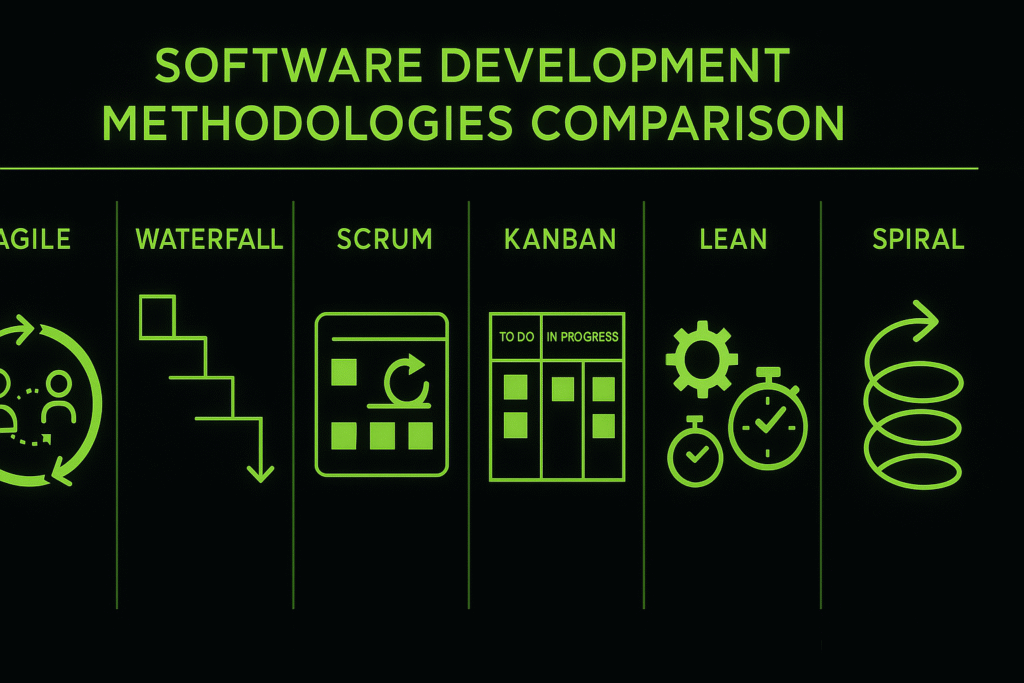
Software Development Methodologies Comparison: A Look at Agile, Waterfall, and Others
Let’s now get into the real software development methodologies comparison by looking at the most widely adopted approaches:
Waterfall Model:
Waterfall is the oldest and most linear methodology. It follows a strict phase by phase approach. Each step from planning and design to coding and testing is completed before the next begins without allowing no overlap between stages. Like a real-life waterfall, this software development method flows seamlessly from start to finish without interruption.
Benefits:
- Straightforward and easy to manage
- Best for well-defined projects with fixed requirements
- Easier documentation and cost prediction
- Each stage is clearly defined and completed one by one
Drawbacks:
- Not flexible to changes once development begins
- Late discovery of issues during testing phase
- Doesn’t work well for fast-changing projects
- Risks associated with the inability to go back to the previous stage and fix issues
- Integration is done at the very end, presenting bottlenecks
Factors that contribute to choosing the Waterfall approach includes clear, fixed, and well documented requirements, static easy to understand technology, stable product definition, a variety of resources for product support, low Product Owner Involvement and strictly-set timeline. Although, Waterfall’s main advantage lies in its strict task order and clear timelines.
It facilitates task division among departments and monitors progress closely. Waterfall is still used in Pakistan, especially for government and large-scale industrial projects where specifications are clear and unlikely to change.
Agile Methodology:
Agile methodology is based on the iterative model, but it is more adaptive and delivers working software quickly. It meets client’s needs and offers flexibility. Projects are divided into short iterations lasting 1 to 3 weeks, with multiple teams tackling various project aspects concurrently.
This approach reduces production time and lowers costs. In simple words, Agile breaks projects into smaller, manageable cycles called sprints. This allows for continuous feedback, improvement, and rapid delivery.
Benefits:
- High flexibility
- Continuous collaboration with clients
- Early detection and fixing of issues
- Faster releases
Drawbacks:
- Requires skilled teams
- Needs active client involvement
- Less emphasis on detailed documentation
Agile is becoming the dominant model in the software development methodologies comparison because of its adaptability. In Pakistan, startups and agencies like CodexPeak prefer Agile due to its efficiency and ability to meet dynamic market needs.
Scrum and Kanban:
Scrum is a specific Agile framework that emphasizes short iterations, daily stand-ups, and defined roles (Product Owner, Scrum Master, Development Team). Kanban, on the other hand, focuses on visualizing workflow using boards to maximize efficiency and minimize waste. Scrum is best for structured Agile teams and Kanban is best for ongoing projects with a continuous flow of tasks.
Lean and Spiral Models:
Lean development focuses on eliminating waste, maximizing customer value, and continuous improvement. The Spiral model combines iterative development with risk assessment, making it ideal for large scale and complex projects. Each of these models offers unique benefits. The purpose of this software development methodologies comparison is to help you match the right approach with your project’s needs, scale, and flexibility.
What is DevOps in Software Development? A Beginner Friendly Justification
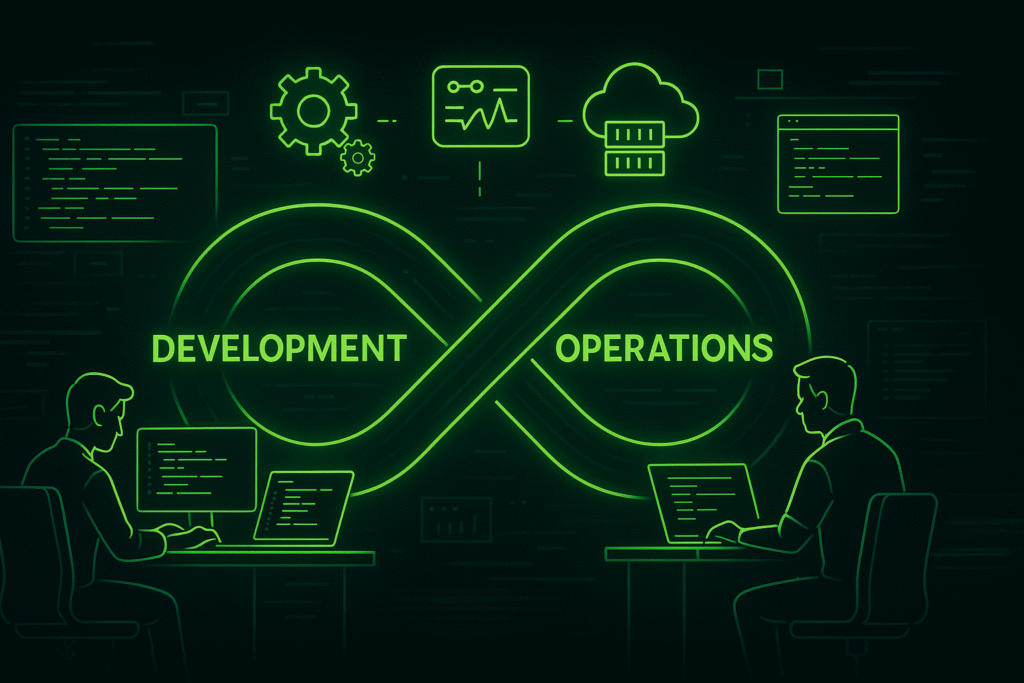
In addition, the DevOps model emphasizes automation and team collaboration, enhancing collaboration through continuous feedback. The DevOps model carry outs continuous Integration and delivery, Micro services, Infrastructure as code, Monitoring and logging, Communication and collaboration. In simple terms, DevOps is a philosophy and set of practices that brings together software development (Dev) and IT operations (Ops). It aims to shorten the
development lifecycle while delivering high-quality software continuously.
Accordingly, what is DevOps in software development practically? It means teams use automation tools and collaborative workflows to build, test, and deploy code faster and more reliably. Tools like Jenkins, GitLab, Docker, Ansible, and Kubernetes are staples in DevOps environments.
Now, what is DevOps in software development doing differently than traditional methods?
- Continuous Integration (CI): Developers merge code frequently to detect problems early
- Continuous Delivery (CD): Code is automatically tested and deployed
- Infrastructure as Code (IaC): Servers and configurations are managed using code
In Pakistan, where companies like CodexPeak are handling global clients. DevOps model provides a crucial edge in terms of speed, efficiency, and customer satisfaction.
Software Development Methodologies Comparison: Which One Should You Choose?
Making the right choice depends on several factors. This section of the software development methodologies comparison breaks it down.
Project Type and Requirements:
- Waterfall is great for projects with clearly defined scope and requirements.
- Agile and Scrum are ideal for evolving products, MVPs (Minimum Viable Product), and startups.
- DevOps is perfect for long-term applications requiring frequent updates.
Team Experience:
- New or junior teams might prefer the structure of Waterfall.
- Experienced, cross-functional teams thrive in Agile or DevOps environments.
Client Involvement:
- Choose Agile or Scrum if clients can provide frequent feedback.
- Go with Waterfall for projects where client interaction is limited after the initial stage.
Budget and Timeline Constraints:
- Fixed-budget projects work well with Waterfall.
- Tight deadlines or time-to-market pressure? Choose Agile or DevOps.
Company Culture and Tools:
- A collaborative culture supports Agile and DevOps.
- Traditional, process driven organizations may prefer Waterfall.
In Pakistan’s fast-developing IT ecosystem, this practical software development methodologies comparison helps companies tailor their strategies based on their size, goals, and client expectations.
- What’s Next? Future Trends in Software Development Methods
In fact, the world of software is not static. It is evolving rapidly. As we look beyond traditional software development methodologies comparison, here are the major trends shaping the future:
1) Hybrid Methodologies:
Companies are blending Waterfall and Agile to create custom workflows. For instance, the planning and budgeting phase may use Waterfall, while execution follows Agile.
2) AI and Automation in Development:
From automated code reviews to AI-powered testing, artificial intelligence is redefining software engineering practices.
3) Cloud-First DevOps:
As businesses in Pakistan and beyond adopt cloud platforms, DevOps is transforming into CloudOps, enabling continuous delivery in multi-cloud environments.
4) Security Driven Development:
Security is no longer an afterthought. Models like DevSecOps integrate security into every step of the development process.
5) Low Code and No Code Platforms:
Small businesses and entrepreneurs are increasingly using visual tools to develop applications without writing complex code. Staying ahead of these trends requires adaptability. Companies that continually revise their approach to software development will thrive in competitive markets. That is the true value of a software development methodologies comparison and the ability to evolve.
Conclusion: Partner with CodexPeak to Make the Right Choice
In conclusion, there is no one size fits all approach when it comes to software development. But a well-informed software development methodologies comparison provides the clarity and direction every business needs to succeed.
Whether you are a startup building your first app or an enterprise rolling out complex digital solutions, choosing the right methodology can determine your success.
At CodexPeak, we bring strategy, structure, and innovation together. We help businesses in Pakistan globally, and develop software that is not only functional but also scalable and future ready. From Agile sprints to DevOps pipelines and everything in between, our team is equipped to guide your project every step of the way.
Need Help Choosing the Right Software Development Methodology?
Let’s talk!
Email us at:
contact@codexpeak.com
Codexpeakpakistan@gmail.com
Call us:
+92 300 9337330
Let CodexPeak be your partner in building world class software that delivers results.